The iPhone's Evolving Approach to Tactile Feedback: Beyond Vibration
The iPhone's Evolving Approach to Tactile Feedback: Beyond Vibration
From the earliest models, the iPhone has relied on vibration to provide tactile feedback. Initially, this was a simple, utilitarian notification system. However, over the years, Apple has significantly refined its approach to haptics, culminating in the sophisticated Taptic Engine. But the future of tactile feedback on the iPhone promises to be even more nuanced, moving beyond simple vibrations to incorporate more complex and intuitive sensory experiences.
Editor's pick: MagSafe iPhone cases on Amazon → As an Amazon Associate, this site earns from qualifying purchases.
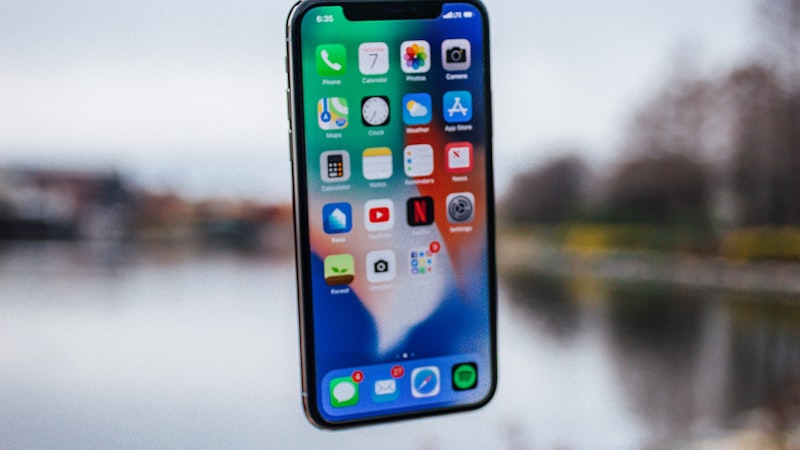
The Taptic Engine, introduced with the iPhone 6s, marked a turning point. It provided more precise and localized haptic responses compared to the crude vibrations of earlier models. This allowed for a more immersive user experience, with distinct feedback for different actions and notifications. The removal of the physical Home button on the iPhone 7 further emphasized the importance of haptics, with the Taptic Engine simulating the feel of a click.
While the Taptic Engine remains a core component of the iPhone's haptic system, Apple has been exploring alternative and complementary technologies. Patents filed by the company suggest a growing interest in surface haptics, which involve manipulating the texture of the device's surface to create different tactile sensations. This could potentially allow for the creation of virtual buttons, sliders, and other interactive elements directly on the display or other surfaces of the iPhone.
One promising area of development is electrostatic friction modulation. This technology uses electrical charges to alter the friction between a user's finger and the device's surface. By varying the friction, the device can simulate the feeling of different textures, from smooth glass to rough sandpaper. Imagine scrolling through a list and feeling the subtle bumps of each item as your finger passes over it. Or feeling the distinct texture of a virtual dial as you rotate it.
Another potential avenue for innovation is shape-changing interfaces. While still in the early stages of development, this technology involves the use of micro-actuators to physically deform the device's surface, creating raised buttons, textured patterns, or even more complex three-dimensional shapes. This could be particularly useful for users with visual impairments, as it would allow them to navigate the iPhone's interface by touch alone.
The integration of advanced materials is also crucial. As we explored in our analysis of display technology at iPhone View, the properties of the glass and other materials used in the iPhone's construction play a significant role in the overall tactile experience. Future iPhones may incorporate materials with unique tactile properties, such as self-healing polymers or shape-memory alloys.
Supply chain reports indicate that Apple has been actively working with suppliers to develop and refine these advanced haptic technologies. While the exact timeline for their integration into the iPhone remains unclear, it is evident that Apple is committed to pushing the boundaries of tactile feedback.
The move beyond basic vibration represents a significant shift in Apple's approach to user interface design. By incorporating more sophisticated and nuanced tactile feedback, Apple aims to create a more immersive, intuitive, and accessible user experience. The future iPhone may not just be seen and heard, but also felt in ways we can only begin to imagine.
This evolution also impacts accessory design. Consider the MagSafe ecosystem. As our sister site iPhone Open reports on foldable designs, advanced haptic feedback could be crucial in communicating the secure attachment of a folded iPhone, offering confirmation beyond visual or auditory cues.
The journey from rudimentary vibration to sophisticated surface haptics and shape-changing interfaces is a testament to Apple's commitment to innovation. As the iPhone continues to evolve, tactile feedback will undoubtedly play an increasingly important role in shaping the user experience.
Questions readers ask
Does evolving tactile feedback require new developer APIs, or can existing apps adapt?
Apple historically ships a quiet developer API the year before the hardware lands, so existing apps that follow human-interface guidelines should adapt with modest work. Apps that hard-code layouts will need updates.
What would convince a sceptical reviewer that evolving tactile feedback is worth it?
Hands-on time is the only honest test. A reviewer's first hour with the device tells them whether evolving tactile feedback is solving a real problem they had, or a feature looking for a use case. The reviews following launch will be the verdict.
Will evolving tactile feedback replace the current model or sit alongside it?
The likeliest path is co-existence — a new variant alongside the existing lineup, not a replacement. Apple's segmentation playbook keeps the older model around at a lower price for at least one cycle to absorb the gap.
How does evolving tactile feedback stack up against what Samsung or Google already ship?
Android OEMs reached this corner of the market first, but they did so with looser tolerances on durability and software polish. Apple's bet is that arriving second with a tighter integration story wins more buyers than arriving first.
In short — what's the takeaway on more from iphone arc?
It comes back to whether Apple can ship evolving tactile feedback without compromising the parts of the iPhone people already pay for. The detail in this section is where that case is made or broken.