The iPhone's Evolving Approach to Surface Finishes: Beyond the Matte
The iPhone's Evolving Approach to Surface Finishes: Beyond the Matte
The iPhone, since its inception, has been as much about its tactile experience as it has been about its functionality. While internal components and software receive considerable attention, the external surface finish plays a crucial role in user perception, grip, durability, and overall premium feel. Apple's journey with surface finishes has been a constant evolution, driven by advancements in materials science, manufacturing processes, and a relentless pursuit of design perfection.
Editor's pick: MagSafe iPhone cases on Amazon → As an Amazon Associate, this site earns from qualifying purchases.
Early iPhones, most notably the original and the iPhone 3G/3GS, embraced glossy finishes, often utilizing glass and polished plastic. These finishes, while visually striking, were notorious for attracting fingerprints and scratches. Apple quickly recognized the need for more durable and practical solutions.
The introduction of aluminum unibody designs with the iPhone 5 marked a significant shift. Anodization, a process that electrochemically converts the metal surface into a decorative, durable, corrosion-resistant, anodic oxide finish, became a staple. This provided a more matte, subdued aesthetic while offering enhanced scratch resistance. However, the anodized aluminum was still susceptible to chipping and scratching, particularly on the chamfered edges.
Subsequent generations saw refinements in anodization techniques and the introduction of new aluminum alloys. Space Gray, Silver, Gold, and later Rose Gold, were achieved through carefully controlled anodization processes. These colors were not merely cosmetic; they represented Apple's mastery over material science, ensuring consistent color reproduction across millions of devices.
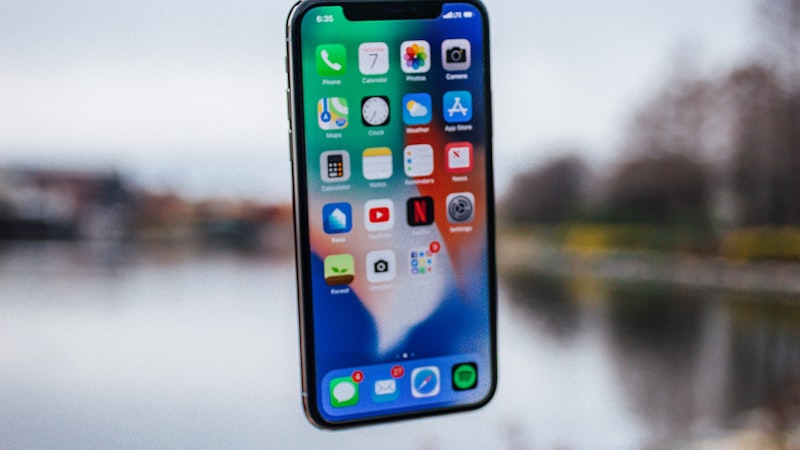
With the iPhone X, Apple reintroduced glass backs, this time using strengthened glass panels with oleophobic coatings to mitigate fingerprints. While gloss returned, the glass was significantly more durable than previous iterations. The introduction of stainless steel frames for the Pro models further reinforced the premium feel and added robustness.
The move towards matte finishes gained momentum with the iPhone 11 Pro. Apple employed a textured matte glass back, achieved through a process of acid etching. This provided a subtle, almost velvety feel, significantly improving grip and reducing fingerprint smudges. The iPhone 14 Pro further refined this matte finish with what Apple called 'Surgical Grade' stainless steel, offering increased scratch resistance.
Looking ahead, the future of iPhone surface finishes is likely to be characterized by further integration of advanced materials and manufacturing techniques. We can anticipate the use of even more durable coatings, perhaps incorporating diamond-like carbon (DLC) or other hard materials, to minimize scratching and wear. Self-healing coatings, capable of repairing minor scratches, are also a potential avenue for exploration. Apple's continued focus on environmental sustainability may also lead to the adoption of bio-based or recycled materials in surface finishes.
Beyond durability, texture and haptics are likely to play an increasingly important role. Apple's work in haptics, as we've covered in our article on iPhone Haptics Evolution, demonstrates their commitment to refining the user experience through subtle tactile feedback. We might see iPhones with dynamically adjustable surface textures, controlled electronically to provide different levels of grip or feedback depending on the application or user preference.
Finally, the exploration of new materials is unlikely to stop. We have already seen Apple move to titanium for the iPhone 15 Pro, and the possibilities are endless. As our sister site, iPhone View has explored in depth, the display technology is also evolving rapidly, with new approaches to lamination and cover materials that directly impact the overall feel and appearance of the device. The interplay between the display, the surrounding materials, and the surface finish will be key to creating a truly seamless and immersive user experience.
The iPhone's evolving approach to surface finishes reflects Apple's unwavering dedication to detail and a holistic understanding of the user experience. It's a journey of continuous refinement, driven by innovation in materials science, manufacturing processes, and a deep understanding of human perception.
Questions readers ask
What's the biggest tradeoff Apple has to swallow for evolving surface finishes?
Every Apple decision is a tradeoff, and the obvious one here is internal volume. Adding evolving surface finishes costs millimetres somewhere — usually battery capacity or camera module depth — and Apple has to decide which line item to trim.
What does evolving surface finishes actually cost — in price, weight, or battery?
Expect a premium of roughly $200–300 over the standard model, plus a small weight penalty. Battery life is the bigger variable — early prototypes typically trade an hour or two of screen-on time for the new capability, then claw it back over a generation.
How does evolving surface finishes change the upgrade calculus for existing owners?
Existing owners weigh evolving surface finishes against the upgrade they were already planning. If the feature is meaningful for daily use, it pulls forward upgrades by about a year; if it is novelty, it shifts nothing.
Does evolving surface finishes require new developer APIs, or can existing apps adapt?
Apple historically ships a quiet developer API the year before the hardware lands, so existing apps that follow human-interface guidelines should adapt with modest work. Apps that hard-code layouts will need updates.
In short — what's the takeaway on more from iphone arc?
It comes back to whether Apple can ship evolving surface finishes without compromising the parts of the iPhone people already pay for. The detail in this section is where that case is made or broken.