Beyond the Bezel: Apple's Continued Pursuit of the Seamless iPhone
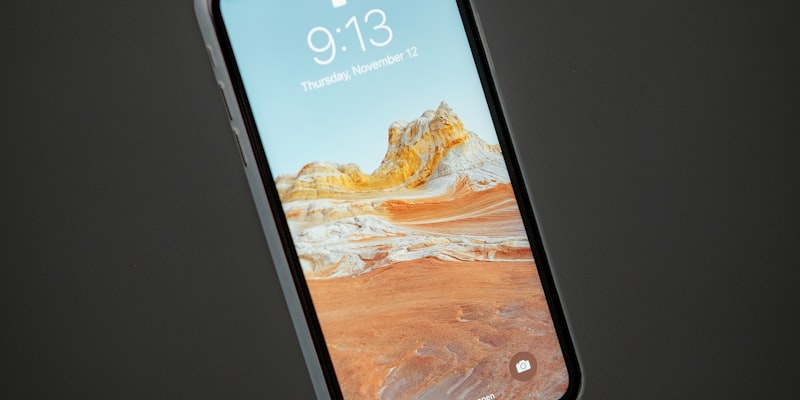
Photo: Unsplash
Editor's pick: MagSafe iPhone cases on Amazon → As an Amazon Associate, this site earns from qualifying purchases.
The Vanishing Edge: A Design Ethos
For years, Apple has subtly but consistently chipped away at the visible seams and boundaries of the iPhone. From the unibody construction of the iPhone 5 to the curved edges of the iPhone 6 and beyond, the direction has been clear: a desire to minimize perceived separation between components and create a more holistic, unified device. This isn't just about aesthetics; it's about creating a more immersive and intuitive user experience.
The Display as a Foundation
The display remains a critical battleground in this quest for seamlessness. While the notch is a distant memory, and under-display camera technology is now maturing, the ultimate goal is a display that truly extends to the very edges of the device, with no visible borders or cutouts. Industry analysis suggests that Apple continues to invest heavily in microLED technology, which offers superior brightness, contrast, and energy efficiency compared to OLED. MicroLED's modular nature also allows for greater flexibility in shaping the display, potentially enabling curved or even foldable designs without compromising image quality. Recent reports from display supply chain analysts point towards increased capacity and yield improvements in microLED production, suggesting a potential rollout to premium iPhones in the coming years.
Integrating Sensors and Haptics
Beyond the display, integrating other components invisibly is a significant challenge. Apple's patents offer clues to their approach. One recurring theme is the integration of sensors directly into the display stack. This could include ambient light sensors, proximity sensors, and even elements of the Face ID system. Embedding these components within the display itself would eliminate the need for dedicated cutouts or bezels, further contributing to the seamless aesthetic. Furthermore, haptic feedback is evolving. The Taptic Engine has become increasingly sophisticated, allowing for localized and nuanced vibrations. Future iPhones could incorporate haptic actuators distributed across the entire surface of the device, providing a more immersive and responsive tactile experience, blurring the line between virtual and physical interactions.
The Role of Materials and Manufacturing
Achieving true seamlessness requires advancements in materials science and manufacturing processes. Apple's continued exploration of ceramic materials is noteworthy. Ceramic offers excellent scratch resistance and signal transparency, and it can be molded into complex shapes with extremely tight tolerances. Combining ceramic with advanced bonding techniques, such as laser welding or diffusion bonding, could create enclosures with virtually invisible seams. Reports indicate that Apple is also exploring new composite materials that combine the strength and durability of metals with the aesthetic appeal of glass or ceramic. These materials could be used to create enclosures that are both lightweight and incredibly strong, while also allowing for the integration of antennas and other components directly into the structure.
Challenges and Future Directions
Despite the progress, significant challenges remain. Heat dissipation, antenna performance, and structural integrity are all critical considerations that must be addressed as devices become increasingly seamless. Furthermore, repairability becomes a concern as components become more tightly integrated. Apple will need to find innovative ways to balance the desire for seamlessness with the need for a durable and repairable device.
Ultimately, Apple's pursuit of the seamless iPhone is a reflection of their broader design philosophy: to create technology that is both beautiful and intuitive, that fades into the background and allows users to focus on what matters most. While the truly seamless iPhone may still be years away, the path towards that goal is becoming increasingly clear.
Recommended from our network
Questions readers ask
Is beyond bezel apples seamless realistic for the next iPhone, or further out?
Most signals point to a later cycle rather than imminent release. Component lead times for beyond bezel apples seamless suggest Apple is still validating the supply side, and the company tends to wait until yields hit production targets before committing on stage.
What's the biggest tradeoff Apple has to swallow for beyond bezel apples seamless?
Every Apple decision is a tradeoff, and the obvious one here is internal volume. Adding beyond bezel apples seamless costs millimetres somewhere — usually battery capacity or camera module depth — and Apple has to decide which line item to trim.
What does beyond bezel apples seamless actually cost — in price, weight, or battery?
Expect a premium of roughly $200–300 over the standard model, plus a small weight penalty. Battery life is the bigger variable — early prototypes typically trade an hour or two of screen-on time for the new capability, then claw it back over a generation.
How does beyond bezel apples seamless change the upgrade calculus for existing owners?
Existing owners weigh beyond bezel apples seamless against the upgrade they were already planning. If the feature is meaningful for daily use, it pulls forward upgrades by about a year; if it is novelty, it shifts nothing.
In short — what's the takeaway on the display as a foundation?
It comes back to whether Apple can ship beyond bezel apples seamless without compromising the parts of the iPhone people already pay for. The detail in this section is where that case is made or broken.